
VanLife travel in Ireland
Everything(ish) you need to know about travelling Ireland and the Wild Atlantic Way by campervan or motorhome
The sheer scale and variety of landscapes Ireland has to offer is immense. And the Wild Atlantic Way is a road trip of a lifetime. Spread out over 1,600 miles, the long coastal road winds its way from the bottom of Ireland, all the way to its top (or vice versa!).
Travelling around Ireland, and along the famous Wild Atlantic Way route, is an eye-achingly beautiful drive, from towering mountain peaks, rugged coast line, empty roads, secluded corners, remote islands, diverse wildlife, incredible hikes and more.
We took on the Wild Atlantic Way in the summer of 2022, driving south to north in our campervan. We had a blast, and, as we do with some of our most memorable trips, we’ve decided to share some top tips and favourite things to do and see.
Here’s everything we think you need to know about travelling around Ireland by campervan.
And, if you’re looking for things to do in each county along the Wild Atlantic Way route, keep an eye out for our next series of blogs here.
And watch the full video series on YouTube here, and we’ll also be posting a few trip ideas shortly!
How can I get there?
There are a ton of ferry options from both France and the UK:
- Cairnryan, Scotland – Belfast, Northern Ireland
- Liverpool, England – Belfast, Northern Ireland
- Holyhead, Wales – Dublin, Ireland
- Fishguard, Wales – Rosslare, Ireland
- Cherbourg, France – Rosslare, Ireland
We’d recommend shopping around direct with the ferry operators from each location. We travelled in peak season, and, with our 7mX3m high campervan, the ferry wasn’t the cheapest. It cost us close to £500 return from Holyhead to Dublin.
But we think the price was more than worth it once we’d started exploring Ireland!
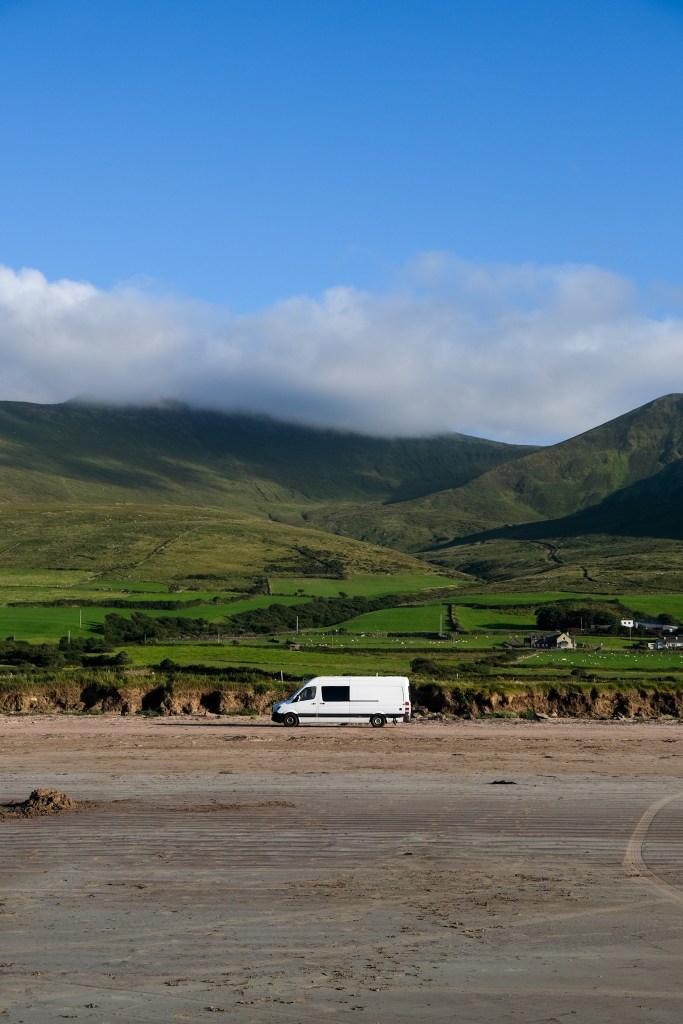


When’s the best time to visit?
The summer time is when Ireland (obviously) has the best, sunniest weather. We visited over July, August and September, and were treated to some record summer temperatures and Irish “heatwaves” (28 degrees!)
We have heard that the shoulder seasons – April to June, and Sept to Nov are a good time to visit in terms of less visitor numbers (although it is a lot damper!), but in summer we didn’t really experience too many frustrating busy moments.
While it’s true that on the sunniest, summery days, everyone flocked to the popular beaches. We found that if we drove a bit further away from towns and cities, there was plenty of space for us to park up and enjoy a day by the beach. And if we were close to civilisation, just ensure you get there early!
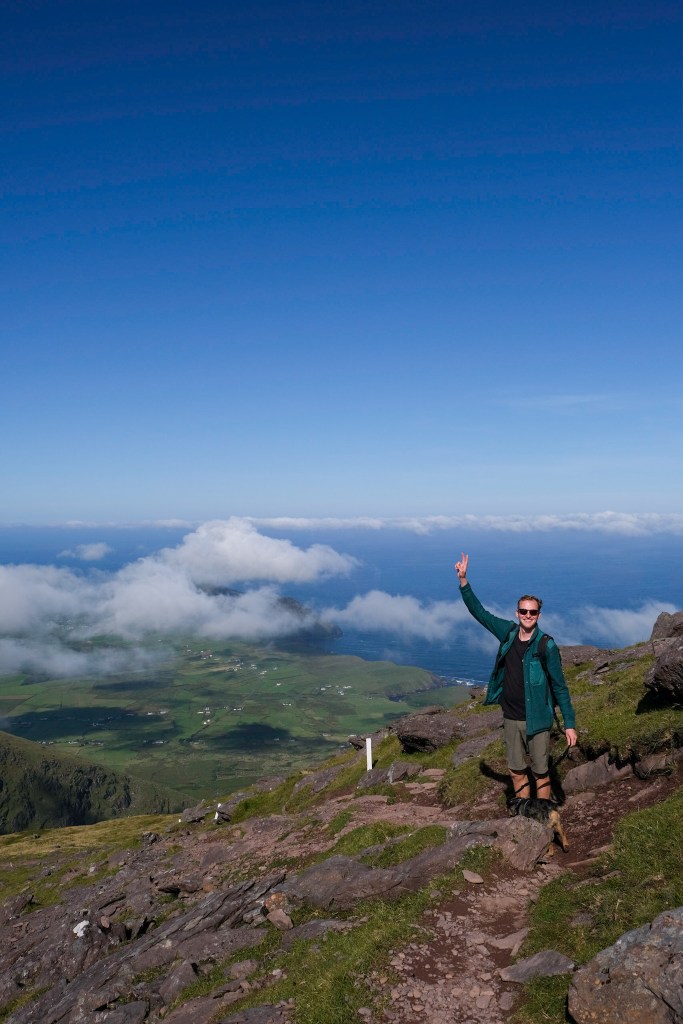
Similarly, we hiked popular routes early, and as we were coming down mountains, the trails were only just starting to get busy.

Travelling in a campervan in Ireland
To UK drivers it’ll probably come as a relief to learn that you also drive on the left hand side of the road in Ireland, as opposed to the right in every other European country.
And the similarities don’t stop there, the roads in Ireland weren’t much more different than the road networks in England. Along the Wild Atlantic Way, there are some narrow roads, but nothing more narrow than a traditional country road in Cornwall or the Lake Districts.
Do pay attention to access signs and restrictions, though, and always try to read the road ahead. While the roads are two-laned and narrow, we sometimes came up against larger tour buses coming the other way!
(oh, and the potholes on the road in Ireland are normal and character building, we’ve heard!)
Campsites, free-sites or both?
Is “Wild Camping” allowed in Ireland?
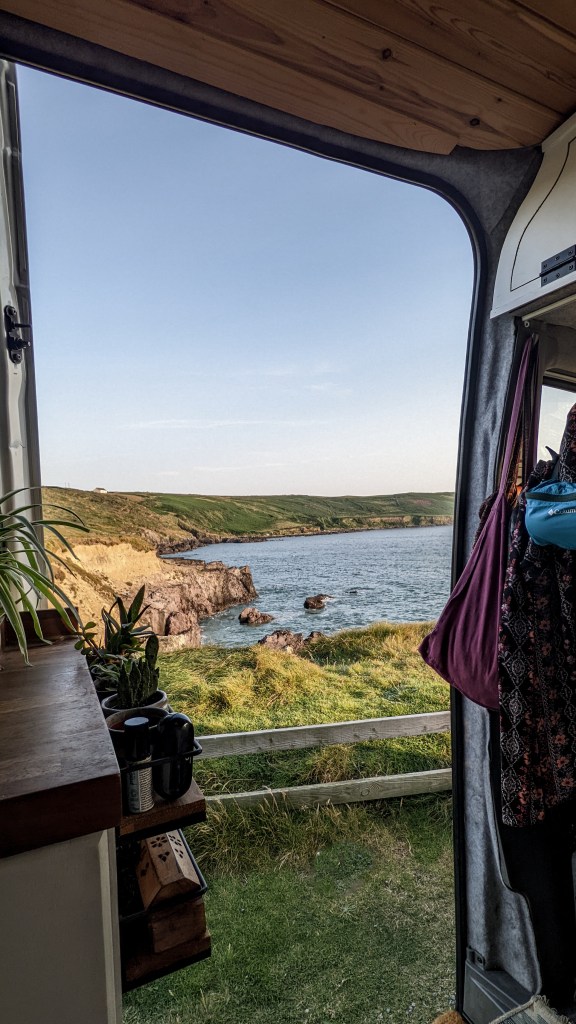
Officially, wild camping is not allowed in Ireland. However, as with countries such as England and Scotland, we found sleeping in our vehicle (and not exhibiting any camping behaviours i.e. not putting chairs or awnings out), and not causing a nuisance is tolerated.
As usual good practice is more than encouraged: don’t overstay your welcome, don’t park in view of people’s houses, obey restrictions, be considerate to other users of the space and leave the spot better than you found it!
We used Park4Night to find these spots. Here’s an idea of some of the spots we parked up in:


What about campsites and aires?
Ireland has plenty of campsites for those who prefer to stay longer in an area and like to have all of the facilities within easy reach. We found that prices during the summer varied widely, from between 20-30 Euros a night. We also spent 40 Euros on a campsite in Galway. Which was a bit of a shock to the system!
We found that many campsites were reluctant to let you pay a small fee to simply use the campsite services and leave, without paying to stay the night. So always call ahead to reserve a spot if possible.
We didn’t stay on many campsites, but big shout out to Creveen Lodge in County Cork for it’s incredible mountain views and hugely friendly owners
You mentioned Motorhome aires in Ireland? What can I do for water, and disposing of black and grey waste?
We found a growing number of motorhome aires in Ireland, which was really great to see. Some free aires have been built by the various county councils along the Wild Atlantic Way. Some were hosted by hospitality businesses such as hotels with big car parks. While a few aires were owned and run by locals who love travelling in campervans, so built an aire themselves! Others were simply water taps located by beaches, which were free to use for our drinking water (note – while we use a water filter to avoid any issues!)
We used Park4Night to find these spots, but a few of our favourite finds are below:
Cork
– West Lodge Hotel and Spa, Bantry
– Castletown Bear Haven aire, close to a really good pub!
Kerry
– Bray Head Loop Car Park, Portmagee (10 Euros)
– Rossbeigh Aire (donation box)
– Sammy’s Camping, Inch Beach (cheap campsite, 20 Euros)
Sligo:
– Hy Breasal B&B (10 Euros)
– Beach Bar (20 Euros)
– Claremorris Aire (donation)
Donegal:
– Camping Spierstown
– Buncrana Aire
Why are there no bins in Ireland?
Your biggest struggle, if you’re free camping alot of the time, will be finding bins for recycling and general waste. Bins are in short supply in Ireland – we never found out why. Our best tip is to use campsites weekly, or seek to stay on Aires frequently. And, if you see a bin, use it! You might not know when you’ll get another chance to get rid of your rubbish!

Travelling with a dog
To visit Ireland, you must have a worm treatment administered by a Vet. On the ferry, Frank stayed in our van, which looked like a much more comfortable option than the ferries Kennels.
In terms of visiting and travelling around Ireland. We found this to be a bit of a mixed bag. Pubs either loved and welcomed dogs, or some pubs and restaurants only let them into the outside deating area, or not at all. We found ourselves calling ahead to double check with most places.
In terms of access to the outdoors with dogs, we found this to also be tricky, but not difficult. A large proportion of Ireland is permissive land, owned by local landowners. And in a number of cases, these landowners ban dogs due to the fear of them stressing livestock. Some landowners allow dogs onto their land, but they must be on a lead. Our best tip is to check online to see which treks and walks are dog friendly. Helpfully, qite alot of this information can be found on AllTrails, an app we use for hiking.
When it came to beaches, we found Frank could chase and run around many beaches. But if they were blue flag protected beaches (the most popular siwmming spots), dogs either had to be kept on lead, or you needed to take them to a space outside of this designated spot.
Here’s some of our favourite dog friendly adventures we recommend!
– Torc Mountain and Killarney National Park
– Mount Brandon
– Mount Errigal
What is the internet situation like in Ireland?
Connectivity was pretty good all along the way! With our UK SIMs were able to roam unlimited. The only time we had problem connecting was when we were really out in the sticks, but the area was busy. The local network got overloaded, and we struggled for reliable network connection to work
Thanks for reading – you can catch the highlights of our Wild Atlantic Way adventure here:
Got any other questions about the Wild Atlantic Way? Contact us via Instagram or via our email and we will add them into this post
 These Wild Journeys